

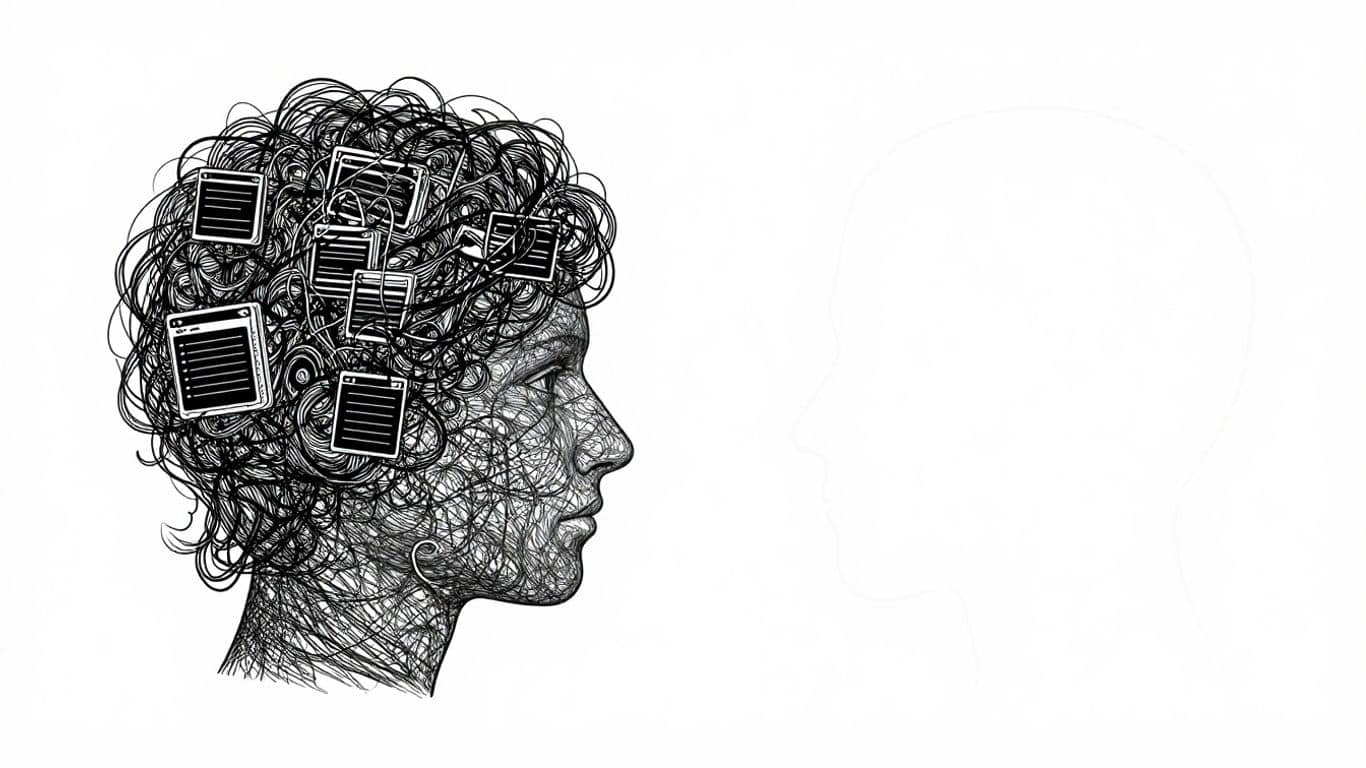
The science is pretty clear: true multitasking is a myth. Here are the main points to remember about why and what to do about it.
Key Takeaways
- Your brain can’t actually do two complex things at the exact same time; it switches between them rapidly.
- This constant switching, called task-switching, costs you time and makes your thinking less sharp.
- The idea of multitasking is appealing because it feels efficient, but it often leads to more mistakes and lower quality work.
- Neuroscience shows a bottleneck in the brain that only allows one complex thought to be processed at a time.
- Focusing on one task at a time, known as single-tasking, is the most effective way to get things done well.
The Illusion Of Simultaneous Processing
You know that feeling, right? You’re juggling emails, Slack messages, maybe a podcast in the background, and you’re convinced you’re a master of doing it all at once. We often think our brains are like super-powered computers, effortlessly running multiple programs side-by-side. But here’s the kicker: that’s not actually what’s happening. Neuroscience tells us that what we call multitasking is really just a rapid-fire switching between tasks, and it comes with a hidden cost.
The Brain’s Single-Lane Bottleneck
Think of your brain’s ability to process complex tasks like a single-lane bridge. Cars (information) can approach from both directions, but only one can cross at a time. Your brain has a specific point, often linked to the prefrontal cortex, that acts as a bottleneck. This is where decisions are made and responses are selected. It can only handle one of these complex operations at any given moment. Trying to push more through just creates a traffic jam.
This bottleneck isn’t just a theory; it’s been shown in experiments. When people are asked to perform two tasks that require conscious thought at the same time, like responding to a sound and a visual cue, there’s always a delay in the second response. It doesn’t matter how much they practice; that delay, known as the psychological refractory period, is a consistent finding. It shows that the brain isn’t processing both simultaneously but is instead queuing them up.
Task Switching: The Real Mechanism
So, if we’re not truly doing things at the same time, what are we doing? We’re switching. Rapidly. Imagine flipping between your code editor and your email inbox. Your brain isn’t doing both; it’s disengaging from one and engaging with the other. This switching isn’t free. Each transition incurs a ‘switch cost,’ a small but significant chunk of time and mental energy lost.
Neuroscientists have even observed this in the brain. When you have one goal, both sides of your prefrontal cortex can work together. But when you try to juggle two goals, the brain splits the work, with each hemisphere taking on a different task. This sounds efficient, but it leads to reduced performance on both. Add a third goal, and the system just collapses, leading to errors and forgotten tasks. It’s a hardware limitation, not a software one.
The Cost of Constant Transitions
This constant switching has real consequences. It’s not just about taking a little longer; it’s about the quality of your work. When you switch tasks, a part of your brain often lingers on the previous task, a phenomenon called ‘attention residue.’ This means you’re not fully present with the new task, leading to mistakes and a decline in overall cognitive performance. It’s like trying to read a book while someone is constantly tapping you on the shoulder.
The myth of multitasking persists because it feels efficient. We get a dopamine hit from checking things off a list, even if those things are just quick glances at notifications. But this perceived efficiency is a trap, leading to more errors and less actual progress.
Here’s a breakdown of what happens:
- Task A: You’re focused and performing well.
- Switch to Task B: Your brain disengages from A, incurs a switch cost, and engages with B. Performance on B is initially lower.
- Switch back to Task A: Your brain disengages from B, incurs another switch cost, and re-engages with A. Attention residue from B might linger, impacting performance on A.
This cycle repeats, and each switch chips away at your focus and accuracy. Understanding this bottleneck is the first step to improving your focus and reclaiming your productivity.
Neuroscience Debunks The Multitasking Myth
So, you think you’re a master of juggling multiple tasks, right? Like a computer running several programs at once? Well, neuroscience has some news for you, and it’s not what you want to hear. Your brain isn’t a computer, and true multitasking just isn’t happening. What feels like doing many things at once is actually your brain rapidly flicking its attention from one thing to another. It’s a constant switching game, and every single switch comes with a hidden cost.
The Central Bottleneck Theory Explained
Think of your brain like a busy highway. When you try to do multiple complex things simultaneously, like writing an email while on a conference call, all that information has to funnel through a single lane. This is the core idea behind the Central Bottleneck Theory. There’s a point in our cognitive processing where we can only handle one stream of information or one decision at a time. Trying to force more through just causes traffic jams, leading to errors and slower responses. It’s not a bug; it’s how our brains are built to handle complex tasks efficiently, one after the other.
Evidence From Cognitive Psychology Experiments
Cognitive psychology experiments have been showing this for years. Researchers often use tasks that require participants to respond to different stimuli. When people are asked to perform two such tasks at the same time, their reaction times slow down significantly, and they make more mistakes compared to when they do each task separately. For instance, studies have observed that even simple tasks, when combined, lead to a noticeable drop in performance. This isn’t just about complex jobs; it shows up even in basic cognitive functions. It’s a consistent finding across many different types of studies, all pointing to the same conclusion: our brains aren’t wired for simultaneous processing of demanding tasks. You can see this effect in action when people try to text while driving.
Why The Brain Cannot Truly Multitask
At its heart, the brain’s architecture has limitations. The prefrontal cortex, the part of your brain responsible for planning and decision-making, acts like a gatekeeper. It can only focus its executive resources on one primary task at any given moment. When you switch between tasks, you’re not performing them in parallel; you’re rapidly serializing them. This constant switching, or task-switching, is what creates the illusion of multitasking. However, each switch requires a mental reset, costing time and cognitive energy. This is why attempting to juggle too many things at once often leads to decreased accuracy and a feeling of being mentally drained, rather than achieving more. It’s a phenomenon that significantly impacts your overall cognitive performance.
Understanding The Multitasking Brain Research
So, we’ve established that juggling multiple tasks isn’t really what our brains do. But what’s actually going on inside that skull when we think we’re multitasking? Neuroscience research has dug into this, and it turns out our brains have some pretty specific limitations that make true simultaneous processing of complex tasks impossible.
The Psychological Refractory Period
Ever notice how when two things happen at once, you tend to react to one first, and then the other? That little delay is a big clue. Scientists call this the Psychological Refractory Period (PRP). It’s basically a bottleneck in our brain’s processing system. When a stimulus comes in, our brain has to figure out what to do about it – that’s response selection. If two stimuli arrive close together, the brain can only select and process the response for one at a time. The second one has to wait its turn. This isn’t just a minor hiccup; it’s a consistent finding in experiments, showing that our ability to respond is serial, not parallel, when it comes to making decisions.
Limitations of the Prefrontal Cortex
That area of your brain right behind your forehead, the prefrontal cortex, is like the executive director. It handles planning, decision-making, and managing your attention. But here’s the catch: it can only really focus its executive power on one set of instructions at a time. It doesn’t split itself in half to handle two complex tasks. Instead, it has to switch its focus back and forth. Think of it like a busy manager who can only give their full attention to one employee’s problem at a time, even if multiple people are waiting at their door. This limitation is a key reason why trying to do too much at once leads to errors and slower work. It’s not a lack of effort; it’s a structural constraint. You can explore how dual-task training might help with these cognitive challenges here.
The Serial Nature of Response Selection
At the heart of why we can’t truly multitask is the stage where our brain decides what action to take based on incoming information. This response selection stage is strictly serial. It’s like a single-lane bridge: only one car (or decision) can pass at a time. Even with practice, if two signals arrive at the same moment, the second response will inevitably be delayed. This isn’t a matter of skill or practice; it’s how our brain is wired. This serial processing means that when you’re switching between tasks, you’re not doing them simultaneously. You’re rapidly shifting your attention, and each shift has a cost. Research shows that vigilance can decrease over time in challenging multitasking situations, with significant decrements appearing after a certain period as noted in studies.
The brain’s architecture has a built-in bottleneck for decision-making. This means that while we might feel like we’re doing multiple things at once, our brain is actually processing them one after another, leading to delays and reduced performance on each task.
Here’s a simplified look at what happens when your brain tries to handle two tasks:
- Stimulus 1 arrives: Brain processes and prepares response.
- Stimulus 2 arrives: Brain must wait for Stimulus 1’s response to be selected and initiated.
- Response to Stimulus 2: Initiated only after the first response is underway, causing a delay.
This serial processing is why even simple tasks, when presented together, lead to measurable performance drops. It’s not about being bad at multitasking; it’s about the brain’s fundamental processing limits.
The Hidden Costs Of Divided Attention
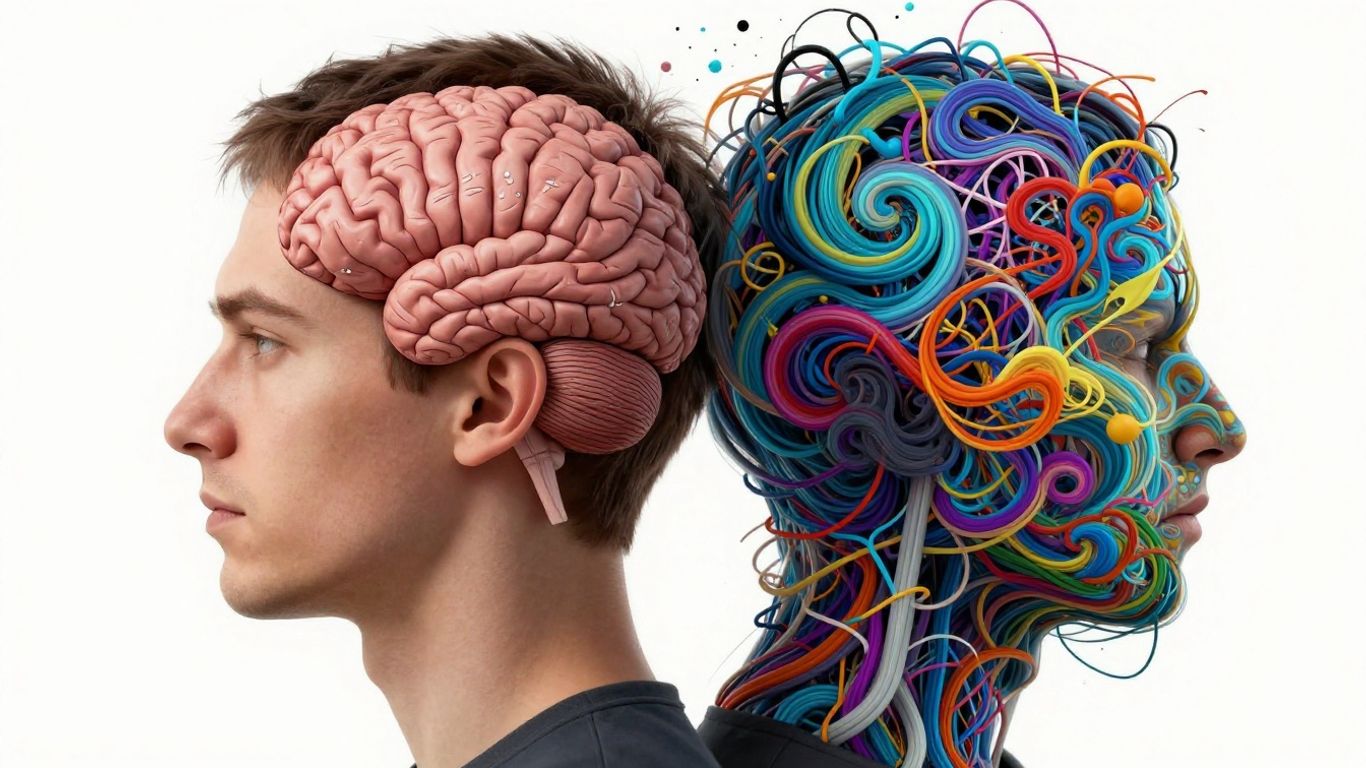
You know that feeling after a day of juggling emails, calls, and project updates? You’re wiped out, but did you actually get much done? That’s the hidden cost of what we call multitasking. It turns out our brains aren’t built for doing multiple complex things at once. Instead, they’re constantly switching, and each switch comes with a price tag.
Decreased Cognitive Performance
When you try to split your attention, your brain has to work overtime. It’s like trying to run two different programs on a computer with very limited memory. Performance on each individual task takes a hit. Studies show that attempting to do two things simultaneously often leads to worse results on both compared to doing them one after the other. This isn’t just about being slower; it’s about making more mistakes and not processing information as deeply. The illusion of handling everything at once masks a significant drop in the quality of your thinking.
The Time Tax of Task Switching
Every time you switch from one task to another, your brain needs a moment to reconfigure. It has to shut down the mental rules for the old task and load up the rules for the new one. This process, though often happening below our conscious awareness, takes time. Research suggests this "time tax" can eat up a surprising amount of your day, potentially consuming up to 40% of your productive hours if you’re constantly jumping between activities. Imagine spending nearly half your workday just on the mental gear shifts!
Here’s a look at how that time gets lost:
- Goal Shifting: Your prefrontal cortex deactivates the mental rule set for Task A and activates the rule set for Task B.
- Rule Activation: Your brain suppresses the rules for the previous task and loads the rules for the new one.
- Attention Residue: Part of your attention remains stuck on the previous task, consuming resources needed for the current one.
Impact on IQ and Productivity
Beyond just wasting time, constantly dividing your attention can actually make you less effective overall. The mental effort required for frequent task switching drains your cognitive resources. This can lead to what’s known as "attention residue," where thoughts from a previous task linger and interfere with your current focus. It’s like trying to read a book while someone is still talking about the last conversation you had – the words on the page don’t quite sink in. This constant mental juggling act can feel exhausting and, over time, may even impact your ability to engage in deep, productive work, making it harder to achieve peak cognitive efficiency.
The brain isn’t designed for parallel processing of complex tasks. Instead, it excels at serial processing, handling one thing at a time. When we attempt to multitask, we’re not truly doing two things simultaneously; we’re rapidly switching between them. Each switch incurs a cognitive cost, leading to reduced performance, increased errors, and a significant drain on mental energy. This constant toggling is a major reason why "multitasking" often feels so draining and unproductive.
Why The Multitasking Myth Persists
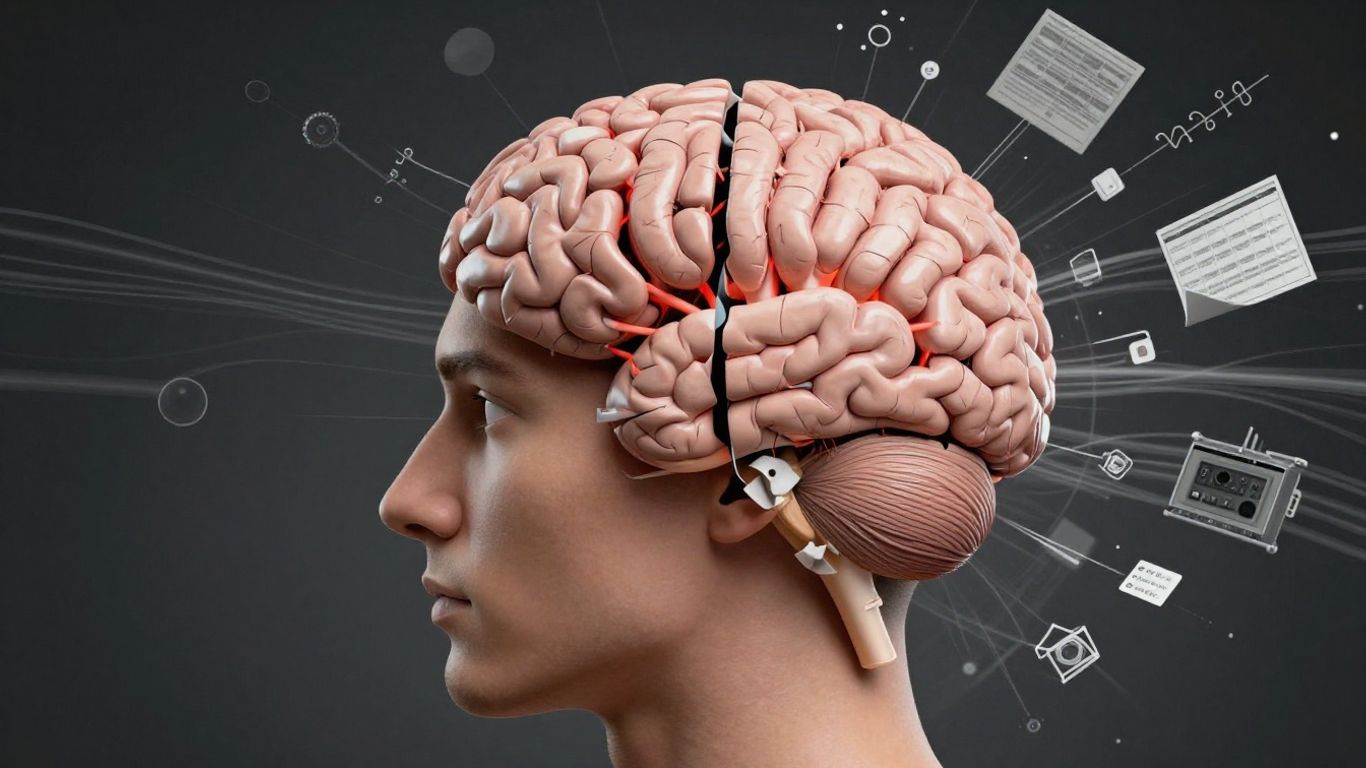
So, if our brains aren’t actually built for juggling multiple complex tasks at once, why do we all think we’re so good at it? It’s a question that gets to the heart of why this idea is so sticky, even when science tells us otherwise. A big part of it comes down to how we perceive our own actions and how technology has shaped our expectations.
Technological Metaphors and Cognitive Biases
We live in a world that often talks about computers and software. We have "programs" running, "windows" open, and we expect our brains to work similarly. This computer metaphor is really powerful. It makes us feel like we should be able to handle lots of things at once, just like a modern laptop can run a dozen apps without breaking a sweat. But here’s the thing: our brains aren’t silicon chips. They’re biological marvels, and their processing works very differently. This fundamental misunderstanding, fueled by tech talk, makes us believe we’re multitasking when we’re really just rapidly switching gears.
The Dopamine Reward Loop
There’s also a chemical reason why multitasking feels so good, at least in the moment. Every time you switch tasks, especially if it involves checking a notification or a quick email, your brain gets a little hit of dopamine. This is the brain’s reward chemical. It makes you feel a sense of accomplishment, even if that accomplishment is just clearing a small item off your mental to-do list. This creates a cycle: you feel a little bored or overwhelmed, you switch tasks, you get a dopamine hit, and you feel momentarily better. This loop trains your brain to seek out these quick bursts of activity, making it harder to resist the urge to switch, even when it’s hurting your overall productivity. It’s a tricky trap that many of us fall into without even realizing it.
The Appeal of Perceived Efficiency
Ultimately, the idea of multitasking is just really appealing. It promises us that we can get more done in less time. Who wouldn’t want that? In our busy lives, it feels like a superpower to be able to handle emails, calls, and projects all at the same time. We see others doing it, or at least appearing to, and we want to keep up. This perceived efficiency, however, is an illusion. The reality is that each switch between tasks costs us time and mental energy. We might feel busy, but we’re often just spinning our wheels. Understanding the actual cognitive costs of task switching is key to breaking free from this cycle and embracing more focused work habits.
Strategies For Enhancing Focus
Everyone wants to stay focused, but it feels tougher than ever. Our brains aren’t designed to handle multiple things at once, so we need a plan for single-task focus. Simple changes to your daily habits can dramatically shift how well you work and how clear you feel.
Time-Blocking for Deep Work
Time-blocking means setting aside specific blocks of your day for one type of work. It’s not just a calendar trick—it matches how your brain naturally cycles through alertness and rest.
- Pick one main task for each block (like 60-90 minutes). Don’t let anything else creep in.
- Add breaks between blocks—your brain will need them for recharge.
- When something pops up that isn’t related, jot it down on a notepad instead of switching. This helps keep your mind present.
Even if you think you can multitask, try devoting just an hour to one thing—it usually feels less draining and leaves you with a cleaner sense of completion.
Minimizing Notification Triggers
Notifications are the modern brain’s enemy. The science says every buzz or ping pulls you into a mini dopamine loop—and even a short interruption leaves your mind less sharp when you return.
Try these steps:
- Turn off all non-emergency notifications during your active work periods.
- Set phone and chat apps to do-not-disturb.
- Batch-check email or messages at set times, so you’re not tempted to check every few minutes.
This approach supports better focus and energy, and it’s backed by what is currently known about brain function during focused attention.
Leveraging Ultradian Rhythms
You can’t fight your biology. Brain research shows most people hit their stride for about 90 minutes, then fade. These cycles are called ultradian rhythms.
- Break complex work into 60-90 minute sprints.
- Use the end of each sprint as a natural stopping point to rest or switch tasks.
- After a deep work block, take a true break—walk around, look away from screens, anything unrelated to the main task.
Here’s the trade-off in brainwaves:
| Brainwave Marker | Focused Work | During Task-Switching |
|---|---|---|
| Frontal beta | Elevated and steady | Drops with interruptions |
| Theta | Clear, balanced | Spikes during switches |
| Gamma coherence | High and coordinated | Fragmented, scattered |
These rhythms show why single-tasking always wins out over multitasking—and why you feel more clear-headed after focused, uninterrupted work periods.
Some workplaces even design their physical and digital spaces to minimize distractions using these evidence-based focus strategies.
Finding what really works is personal, but anyone can start by building basic habits around dedicated time, fewer distractions, and respect for their brain’s natural ups and downs.
The Neuroscience Of Deep Focus
Brain Activity During Single-Tasking
When you’re really focused on one thing, your brain looks different than when you’re trying to juggle a bunch of stuff. Neuroimaging studies show that during deep focus, specific brain areas light up and work together more smoothly. For instance, frontal beta waves, which are linked to concentration and problem-solving, stay elevated. Think of it like a well-tuned engine running at optimal speed. Different parts of your brain also communicate better, with increased gamma coherence, meaning they’re on the same page, working towards that single goal. This coordinated activity is what allows for peak cognitive performance.
The Role of the Default Mode Network
Ever notice how your mind wanders when you’re trying to concentrate? That’s often your Default Mode Network (DMN) at play. The DMN is active when we’re not focused on the outside world, kind of like your brain’s internal daydreaming system. During periods of deep, single-task focus, research shows that the DMN actually quiets down. It’s like telling your internal chatterbox to take a break so you can get some real work done. This suppression is key to preventing distractions and maintaining that intense concentration. It’s a sign your brain is prioritizing the task at hand over random thoughts.
Achieving Peak Cognitive Efficiency
So, how do we get our brains into this super-efficient, single-tasking mode? It’s about aligning with how our brains are wired. Instead of fighting our natural tendencies, we can work with them. This means setting up our environment and our work habits to support sustained attention. It’s not about being a superhero who can do ten things at once; it’s about recognizing that our brains perform best when they can dedicate their full resources to one objective at a time. This approach helps minimize the mental fatigue that comes from constant task switching and allows for more meaningful progress. It’s about quality over quantity when it comes to mental effort, leading to better outcomes and a less frazzled mind. For many, this means actively blocking out time for uninterrupted work, a strategy that aligns with the brain’s natural cycles of alertness and rest, helping you achieve more.
Here’s a look at what happens in your brain during these states:
- During Focused Work: Frontal beta waves are high and steady. Gamma coherence between brain regions is strong. The DMN is largely inactive.
- During Task-Switching: Frontal beta waves drop. Theta waves spike, indicating conflict or mental effort. Gamma coherence becomes fragmented.
The constant urge to check notifications or switch between tasks isn’t a sign of productivity; it’s a neurochemical reward loop hijacking your attention. Your brain gets a small dopamine hit for novelty, making you feel busy, but it comes at the cost of actual cognitive output. Recognizing this pattern is the first step toward reclaiming your focus.
Conclusion
So, the idea that we can juggle multiple complex tasks at once? It’s a popular one, but science shows it’s just not how our brains work. Instead of true multitasking, we’re really just switching between tasks very quickly. This constant switching might make us feel busy, but it actually slows us down, makes us more prone to errors, and can even affect our thinking ability. The good news is that understanding this helps us find better ways to work. By focusing on one thing at a time and minimizing distractions, we can actually get more done, and do it better. It’s time to ditch the multitasking myth and embrace the power of single-tasking for real productivity and better brain function.
Frequently Asked Questions
So, I’m not really multitasking when I text and drive?
Nope, definitely not. When you text and drive, your brain is switching back and forth between focusing on the road and focusing on your phone. It can’t truly do both at once. This switching is super dangerous because your attention isn’t fully on driving, which is why it’s a leading cause of accidents.
Why do I feel like I’m good at multitasking then?
That’s a common feeling! It’s often because we get quick hits of satisfaction from finishing small parts of many tasks. Plus, our brains like new things, and switching tasks can feel exciting for a moment. But this feeling doesn’t match what’s really happening with our brain’s performance, which actually goes down.
Does this mean I can never do two things at once?
Well, it depends on the tasks. Your brain *can* do two things if one is really automatic, like walking and chewing gum. But if both tasks require thinking, like writing an email and listening to a meeting, that’s where the switching happens, and it slows you down.
How much time do I lose by switching tasks?
Quite a bit, actually. Studies show that after an interruption, it can take a long time, like 20 minutes or more, to get back into the flow of your original task. If you switch tasks often, you spend a huge chunk of your day just getting back on track.
Is there a way to train my brain to multitask better?
Unfortunately, no. The research shows that your brain’s structure has a limit – a kind of bottleneck – that prevents true multitasking of complex tasks. Trying to force it just makes you less efficient. The best approach is to focus on getting better at single-tasking.
What’s the opposite of multitasking, and why is it better?
The opposite is single-tasking, or focusing on one thing at a time. When you do this, your brain can give its full attention to the task. This means you make fewer mistakes, do higher-quality work, and often finish tasks faster overall, even though it might not feel as ‘busy’ in the moment.

0 Comments