

Key Takeaways
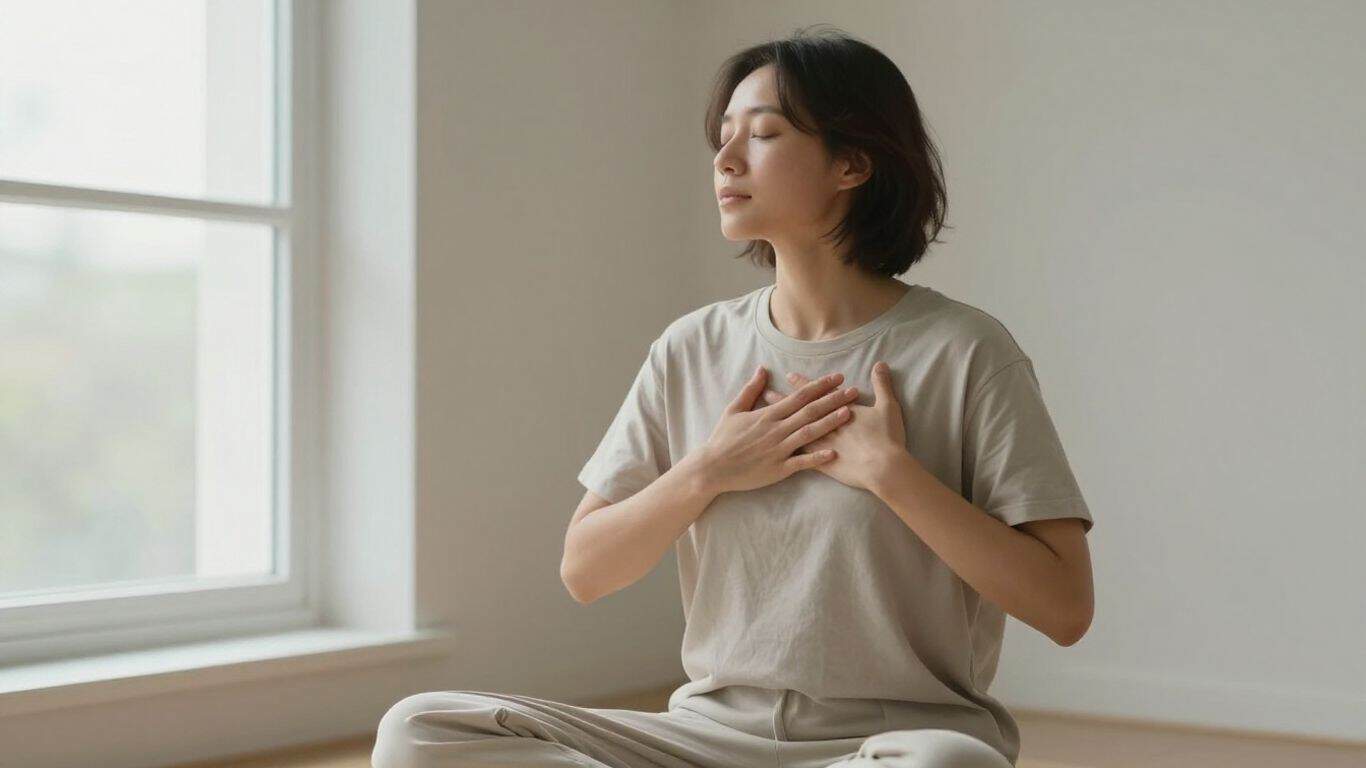
Cyclic sighing is a brief breathing pattern built around two inhales and one long exhale. Research suggests it may ease short-term stress, although it is not a substitute for medical or mental health care.
- Cyclic sighing uses a second, smaller inhale followed by a slow, extended exhale.
- A Stanford study found that five minutes of daily practice improved mood and reduced physiological arousal in participants.
- The technique may feel different from box breathing, resonance breathing, or mindfulness meditation.
- Comfortable, unforced breathing matters more than taking the biggest possible breath.
- Dizziness, pain, or worsening distress is a reason to stop and return to normal breathing.
What cyclic sighing is and why it may relieve stress
Cyclic sighing is a controlled breathing exercise that pairs a double inhale with a longer exhale. The pattern is simple enough to practice without equipment, yet distinctive enough to change the rhythm of breathing for several minutes. Its appeal is partly practical: the breath is automatic most of the time, but it can also be adjusted voluntarily. The growing interest in cyclic sighing research comes from this unusual meeting point between conscious attention and the body’s stress response.
The double-inhale and extended-exhale pattern
Begin with a comfortable inhale through the nose. Before exhaling, add a second, smaller inhale, then release the breath slowly through the mouth. The second inhale need not be large; it is meant to complete the breath rather than fill the lungs forcefully. Repeating this cycle creates the characteristic rhythm of cyclic sighing.
The long exhale is the part that gives the exercise its relaxed, unhurried quality. Some people make the exhale slightly audible, while others prefer a quiet version. Both approaches can work as long as the breath remains comfortable and the throat, jaw, and shoulders stay relatively loose.
How cyclic sighing differs from ordinary deep breathing
Ordinary deep breathing often means taking a larger breath in and letting it out once. Cyclic sighing adds a second inhale before the exhale, so it is not simply a matter of breathing more deeply. The pattern also places clear emphasis on extending the out-breath rather than trying to maximize the amount of air entering.
That distinction matters because taking repeated oversized breaths can leave some people light-headed or tense. Cyclic sighing is better understood as a coordinated rhythm than as a test of lung capacity. Gentle repetition matters more than dramatic breaths.
The role of the lungs, diaphragm, and nervous system
The first inhale expands the lungs, while the smaller second inhale may help open areas that were not fully inflated. The diaphragm moves downward during inhalation and rises as air leaves, giving the breathing cycle a physical structure that can be felt in the abdomen and lower ribs. None of this requires forcing the chest outward or holding the body rigid.
Because breathing is connected to automatic processes such as heart rate and arousal, changing its pace can influence how the body feels. That does not mean one breathing pattern controls every part of the nervous system. It means the breath provides a relatively direct way to introduce a slower, more deliberate signal during a stressful moment.
Why a longer exhale may promote calm
A prolonged exhale can make the whole cycle feel slower and may encourage a shift away from hurried breathing. For many people, that change is calming in itself: attention moves from racing thoughts to a concrete physical action. The effect can also be helped by reducing muscular effort and allowing the next inhale to arrive naturally.
The response is not identical for everyone. Someone who is already breathing rapidly may find a slow exhale grounding, while someone who feels air hunger may need a gentler version. The useful target is steadiness, not the longest possible exhale.
What Stanford’s cyclic sighing research found
A randomized study associated with Stanford compared several brief approaches to managing stress, including cyclic sighing, box breathing, and mindfulness meditation. Participants practiced at home for a short period each day, allowing researchers to examine both how the exercises felt and how breathing changed over time. The results drew attention because the breathing groups showed measurable improvements without requiring a long session.
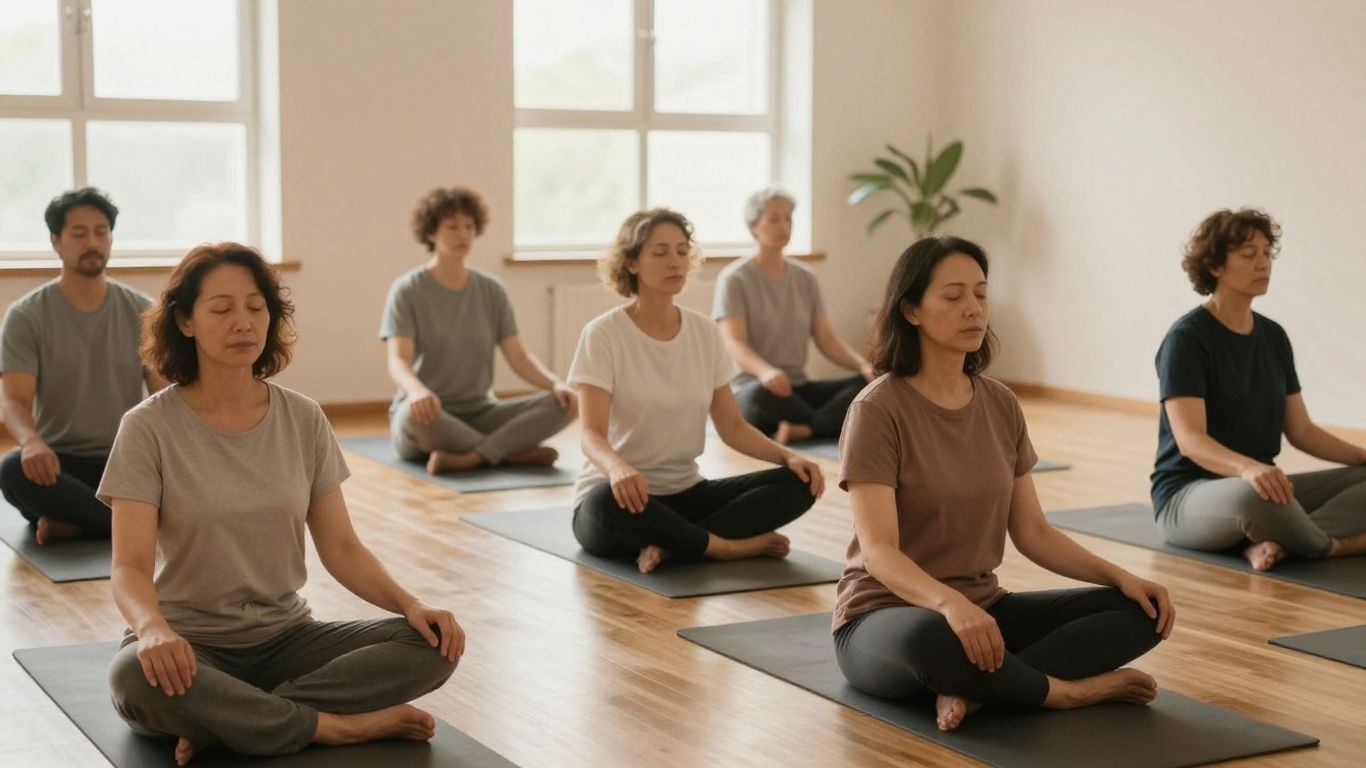
The Stanford breathing study is best read as evidence about a specific protocol and study group, not as a universal ranking of every breathing exercise. Its findings are useful, but the wording around them needs care.
The design of the randomized breathing study
The study assigned healthy adult participants to different daily practices, including cyclic sighing, box breathing, and mindfulness meditation. The breathing exercises were practiced for about five minutes a day over a month, with participants reporting their mood and anxiety and completing physiological measurements. A comparison group continued with ordinary daily activities rather than receiving the same structured breathing instruction.
This design allowed the researchers to compare changes between groups instead of observing only whether people felt better after trying an exercise once. It still was not a clinical trial of a treatment for an anxiety disorder. The participants and the duration of follow-up place useful boundaries around what the results can say.
How cyclic sighing compared with box breathing and mindfulness
All three active practices gave participants a structured way to direct attention, but they used different instructions. Cyclic sighing emphasized repeated long exhalations. Box breathing used a more even pattern involving inhaling, holding, exhaling, and holding again, while mindfulness meditation focused on attending to experience without relying on a prescribed breathing rhythm.
The study reported that cyclic sighing produced the strongest improvements among the tested practices for the measured outcomes. That does not make it the right choice for every person. A technique that feels natural enough to repeat is often more useful than one that appears superior on paper but is uncomfortable in practice.
Changes in mood, anxiety, and physiological arousal
After the practice period, participants in the cyclic sighing group reported better mood and less anxiety, alongside a reduction in resting breathing rate. A slower resting rate was treated as one sign of reduced physiological arousal, not as a complete measure of mental health. The changes were encouraging because they appeared after a relatively brief daily routine.
The cyclic sighing explanation describes the same broad idea in accessible terms: longer exhalations may help interrupt an escalating stress response. Still, a self-reported improvement is not the same as a diagnosis changing, and a lower breathing rate alone does not prove that every stress system has settled.
What “most effective” means in the context of the research
In this context, “most effective” means that cyclic sighing showed the largest average changes among the practices tested for the study’s selected measures. It does not mean that it is the best breathing exercise for every body, every condition, or every kind of distress. Nor does it establish that five minutes will reliably produce the same response outside the study.
A fair interpretation is narrower and more useful: cyclic sighing is a promising, low-cost practice for short-term stress regulation, and it deserves further study. Readers can try it cautiously while keeping the evidence in proportion.
How to practice cyclic sighing correctly
Cyclic sighing does not require a special posture, app, or setting. Sit or lie in a position that allows the ribs and abdomen to move, and begin with a few ordinary breaths before changing the rhythm. The aim is to create a repeatable pattern that feels calming rather than performative. If the exercise makes breathing feel strained, reduce the size of the inhales or stop.
The step-by-step breathing sequence
Use the following sequence as a practical starting point:
- Inhale comfortably through the nose.
- Add a second, smaller inhale before beginning the exhale.
- Exhale slowly and fully through the mouth without squeezing the air out.
- Repeat the pattern at an easy pace.
The second inhale may be little more than a gentle top-up. Let the next cycle begin naturally rather than rushing to fill the lungs again. With practice, the rhythm should feel smooth enough that attention can rest on the exhale instead of counting every detail.
Recommended duration and daily frequency
The Stanford protocol that brought cyclic sighing widespread attention used roughly five minutes of daily practice. That duration is a reasonable starting point, especially for someone new to deliberate breathing. A shorter session can still be useful if five minutes feels tiring or distracting.
Consistency is more informative than a single intense attempt. Try practicing at a quiet time for several days, then notice whether the technique feels easier and whether it changes how quickly you recover from ordinary stress. There is no need to keep extending the session once it stops feeling restorative.
How to breathe comfortably without forcing the inhale
Comfort depends on keeping the first inhale moderate and the second one smaller. The shoulders should not lift sharply, and the abdomen should not be pushed outward with effort. A relaxed mouth, jaw, and upper chest can make the exhale easier to lengthen.
If the breath becomes choppy, return briefly to normal breathing. The goal is not to create a powerful sensation in the lungs. It is to practice a calm, controlled sequence that the body can tolerate without strain.
When to use the technique during a stressful day
Cyclic sighing can fit before a difficult conversation, after an upsetting message, or during a transition between tasks. It may also be useful as a short reset before sleep, provided the practice does not make you more alert. The guided cyclic sighing practice offers one example of using a short routine to establish the pattern.
Choose a safe place where you can sit down and pay attention to your breathing. If stress is accompanied by severe chest pain, faintness, or difficulty breathing, treat that as a medical concern rather than a cue to continue exercising.
How cyclic sighing compares with other breathing techniques
Breathing exercises can look similar while asking the body and mind to do different things. Cyclic sighing emphasizes an extended exhale, whereas other methods may emphasize equal timing, a particular breathing rate, or open observation of thoughts. Comparing the instructions helps prevent the common mistake of blending several methods into an uncomfortable hybrid.

The cyclic breathing video is another practical introduction, but no demonstration can account for every respiratory condition or personal response. Use comparisons as a way to choose gently, not as a reason to push harder.
Cyclic sighing versus box breathing
Box breathing usually divides the cycle into four similarly timed phases: inhale, hold, exhale, and hold. Cyclic sighing has no required post-exhale hold and uses two inhalations before one longer exhalation. The difference is especially noticeable for people who find breath-holding effortful or distracting.
Box breathing may appeal to someone who likes a clear, symmetrical count. Cyclic sighing may feel more natural to someone seeking a softer transition into a slower state. Neither label guarantees a particular result, and comfort should guide the choice.
Cyclic sighing versus coherent or resonance breathing
Coherent or resonance breathing generally aims for a steady breathing rate that may be chosen to support smooth cardiovascular rhythms. It usually does not include the distinctive second inhale of cyclic sighing. The emphasis is often on regularity across the entire cycle rather than making the exhale notably longer.
Someone who enjoys a steady metronome-like pace may prefer resonance breathing. Someone who wants a simple physical cue for releasing tension may prefer the double inhale and long exhale. Both approaches can be practiced gently, without treating the breath as something to control with maximum precision.
Cyclic sighing versus mindfulness meditation
Mindfulness meditation may use the breath as an anchor, but it does not necessarily ask the practitioner to change the breathing pattern. The central skill is noticing sensations, thoughts, and feelings without immediately reacting to them. Cyclic sighing is more active: it gives the breath a specific sequence to follow.
That makes cyclic sighing appealing during a sharp wave of physical stress, while mindfulness may be useful for developing a broader relationship with recurring thoughts and emotions. They can also be practiced at different times rather than combined in a single session.
Choosing a technique based on your stress response and goals
A useful choice begins with the problem you are trying to address. If you feel hurried and physically activated, a longer exhale may be a sensible experiment. If counting helps you stay focused, a timed pattern may suit you better; if counting increases tension, simple observation may be preferable.
| Goal or experience | Possible starting point | What to watch for |
|---|---|---|
| Rapid, shallow breathing | Gentle cyclic sighing | Strain or light-headedness |
| Preference for precise timing | Box breathing | Discomfort during holds |
| Desire for an even rhythm | Coherent breathing | Over-focusing on the count |
| Repetitive or anxious thoughts | Mindfulness meditation | Frustration with wandering attention |
The table is not a prescription or a ranking. It is a reminder that the same technique can feel different depending on the person’s stress response, expectations, and physical health. Start with the least demanding version and adjust from there.
What the research can and cannot prove
The Stanford findings offer a useful signal, but they do not settle every question about cyclic sighing. A short breathing routine can influence how someone feels in the moment without treating the underlying cause of persistent anxiety or depression. The difference between immediate regulation and durable health improvement is central to reading the evidence responsibly.
Short-term stress relief versus lasting mental health benefits
The study measured changes over a relatively short practice period. That supports the possibility of short-term improvements in mood, anxiety, and arousal, but it does not establish long-term protection from stress or mental illness. Longer follow-up would be needed to learn whether benefits persist after people stop practicing or whether regular practice changes broader functioning.
A person may therefore use cyclic sighing as one small coping skill without expecting it to resolve chronic distress. Short-term relief can be worthwhile, but it should not be confused with comprehensive treatment.
Limits of the study sample and breathing measurements
Research findings depend on who participated, how the exercises were taught, and which outcomes were measured. A study of generally healthy adults may not predict what happens for children, older adults, people with lung disease, or people experiencing severe psychiatric symptoms. Self-reported mood is valuable, but it is only one type of evidence.
Breathing rate and related physiological measures also provide partial information. They can suggest a change in arousal without explaining every mechanism behind it. Replication across larger and more varied samples would make the conclusions more dependable.
Why individual responses may vary
Breathing is closely tied to personal history and bodily sensation. One person may experience a long exhale as reassuring, while another may notice air hunger, panic, or discomfort. Expectations, posture, current stress level, sleep, medication, and respiratory health can all shape the experience.
Variation does not automatically mean the technique is ineffective. It means that a responsible practice leaves room to shorten the session, reduce the breath size, or choose a different method when needed.
What additional cyclic sighing research should examine
Future studies could compare different session lengths, practice schedules, and versions of the double-inhale pattern. They could also examine people with diagnosed anxiety, chronic stress, respiratory conditions, or sleep difficulties rather than relying primarily on healthy volunteers. Longer follow-up would help distinguish a temporary state change from a lasting benefit.
Researchers may also learn more by combining subjective reports with breathing, cardiovascular, and behavioral measures. That broader approach could clarify who benefits most and which adaptations are safest.
Common mistakes that can reduce its effectiveness
A breathing exercise can become counterproductive when the instructions are treated as a performance challenge. People sometimes inhale too forcefully, count too rigidly, or continue despite clear discomfort because they assume a stronger sensation means a better result. Cyclic sighing works best as a modest experiment in regulation, not as a contest.
Breathing too deeply or too quickly
Taking very large breaths in rapid succession can create a feeling of light-headedness and may increase anxiety. The first inhale should be comfortable, and the second should be smaller. Slowing the overall pace is usually more helpful than trying to draw in as much air as possible.
If you notice tingling, dizziness, or a sense that you cannot get a satisfying breath, stop the exercise and breathe normally. Resume only if the sensation settles and the practice feels genuinely comfortable.
Holding the breath for too long
Cyclic sighing does not require a long breath hold. Adding a hold because another breathing method uses one can make the exercise feel tight or alarming. Let the exhale begin after the second inhale, and allow the next inhale to arrive without urgency.
A brief natural pause is different from deliberately withholding the breath. Keeping that distinction clear helps preserve the relaxed quality of the exercise.
Treating discomfort as a sign to continue
Discomfort is information, not proof that the technique is working. Chest tightness, worsening panic, pain, or persistent breathlessness should not be pushed through in search of a calming effect. Return to ordinary breathing and assess whether another approach or professional guidance is needed.
A smaller inhale, a shorter session, or breathing without the second inhale may be a reasonable adaptation for mild strain. More serious or unfamiliar symptoms deserve medical attention.
Expecting immediate relief in every situation
Even a well-taught breathing pattern may not erase stress instantly. Some situations involve grief, danger, trauma, illness, or an ongoing conflict that cannot be resolved by changing the breath for five minutes. Cyclic sighing may offer a pause, but it is not required to produce a dramatic emotional shift to be useful.
Try judging the practice by smaller signs: a little more room to think, a slower pace, or a greater ability to choose what to do next. Those modest changes are more realistic than demanding instant calm.
Safety considerations and practical adaptations
For most healthy adults, a gentle breathing practice is low risk, but “gentle” is the important word. Respiratory symptoms, panic sensitivity, pregnancy, cardiovascular concerns, and other health conditions may change what feels appropriate. The technique should complement good judgment rather than override it.
When to stop because of dizziness or discomfort
Stop if you feel dizzy, faint, unusually breathless, nauseated, panicked, or physically unwell. Sit or lie down safely, return to ordinary breathing, and wait for the sensation to pass. Do not resume simply to complete a planned five-minute session.
Urgent symptoms such as severe chest pain, blue lips, sudden confusion, or serious difficulty breathing require urgent medical help. A breathing exercise is not an appropriate response to a potential emergency.
Adapting the practice for respiratory conditions
People with asthma, chronic obstructive pulmonary disease, vocal cord problems, or other respiratory conditions may need individualized instructions. A smaller inhale, no audible exhale, fewer repetitions, or ordinary breathing may be more suitable than the standard pattern. Avoid practicing during an active flare unless a clinician has specifically advised you how to proceed.
The safest adaptation is one that preserves easy breathing. If you are unsure whether the technique fits your condition, ask a qualified clinician rather than relying on a generic demonstration.
Situations where professional medical guidance is appropriate
Professional guidance is especially appropriate when breathlessness is new, worsening, unexplained, or accompanied by chest symptoms. It is also sensible when anxiety, panic, low mood, or insomnia is persistent enough to interfere with daily life. A clinician can help distinguish a stress response from a medical problem.
People taking medication or managing a diagnosed condition should treat breathing exercises as an additional practice to discuss, not as a replacement for individualized advice. The cyclic sighing overview can explain the basic method, but it cannot assess a reader’s health history.
Using cyclic sighing as a complement to, not a replacement for, treatment
Cyclic sighing may be one tool in a larger plan that includes therapy, medication, sleep support, physical activity, or treatment for an underlying condition. It should not be used to delay care or to suggest that ongoing symptoms reflect a failure to breathe correctly. The value of the exercise is practical and limited: it may help some people regulate a moment of stress.
Use it when it feels safe, stop when it does not, and keep expectations proportional to the evidence. That balanced approach leaves room for both self-care and appropriate professional support.
Conclusion
Cyclic sighing is a simple pattern with a double inhale and a longer exhale, and research suggests it can improve short-term mood and reduce physiological arousal for some people. Its strongest case is as a brief, accessible stress-regulation skill—not a cure or a replacement for care. Practice gently, pay attention to your body’s response, and let comfort rather than intensity guide the exercise.
Frequently Asked Questions
What is cyclic sighing?
Cyclic sighing is a breathing exercise in which a person takes one inhale, adds a smaller second inhale, and then exhales slowly and fully. The cycle is repeated at a comfortable pace.
How long should I practice cyclic sighing?
A five-minute session is a practical starting point because that duration was used in research, but shorter sessions are reasonable if the exercise feels tiring or uncomfortable. Consistency matters more than forcing a longer practice.
Is cyclic sighing the same as deep breathing?
No. Ordinary deep breathing may involve one larger inhale and one exhale, while cyclic sighing specifically uses a second smaller inhale followed by an extended exhale.
Can cyclic sighing reduce anxiety?
It may reduce short-term feelings of stress or anxiety for some people. It is not a proven standalone treatment for an anxiety disorder and should not replace professional care when symptoms persist.
What should I do if I feel dizzy while practicing?
Stop the exercise, return to normal breathing, and sit or lie down safely. If dizziness persists, recurs, or occurs with other concerning symptoms, seek medical advice.
Can I practice cyclic sighing with a respiratory condition?
Some people with respiratory conditions may need a modified version or may need to avoid the exercise during a flare. Ask a clinician for individualized guidance, especially if the technique causes breathlessness or chest discomfort.
Is cyclic sighing better than other breathing techniques?
Research found stronger average results for cyclic sighing than for the other practices tested in one study, but that does not make it universally best. The most suitable technique depends on comfort, goals, health, and whether the method is easy to practice consistently.

0 Comments