


Key Takeaways
Suppressing an emotion is not automatically harmful, but repeatedly pushing feelings away can carry psychological, social, and physical costs.
- Emotional suppression differs from healthy regulation and privacy.
- Holding feelings back can consume attention and working memory.
- The effects depend on intensity, duration, context, culture, and support.
- Suppression may affect communication, sleep, stress, and bodily tension.
- Naming emotions and seeking safe support can make difficult feelings easier to manage.
What emotion suppression means—and what it does not mean
Emotion suppression research often begins with a distinction that is easy to miss: controlling the outward display of an emotion is not the same as eliminating the emotion itself. A person may look calm while feeling angry, frightened, or deeply sad. The feeling can remain active internally even when no one else sees it.
Emotional suppression versus emotional regulation
Suppression usually means inhibiting the expression of an emotion, often because showing it feels unsafe, inappropriate, embarrassing, or inconvenient. Regulation is broader: it includes noticing what is happening, understanding the feeling, and choosing how to respond. Regulation may involve reducing an emotion, but it can also mean allowing it to be present without letting it dictate behavior.
A regulated response might sound like, “I am furious, so I need ten minutes before I answer.” A suppressed response might be a quick “I’m fine” followed by continued rumination and tension. The outside behavior can look similar in the moment, while the inner process is quite different.
The difference between hiding feelings and processing them
Hiding a feeling is about what other people can observe. Processing it involves turning toward the experience enough to identify its meaning, needs, and possible next step. Someone can keep private details private while still acknowledging them internally; privacy alone is not evidence of unhealthy suppression.
The difference often appears later. A processed emotion tends to become clearer and more manageable with time. A hidden but unprocessed emotion may keep returning as intrusive thoughts, bodily discomfort, irritability, or a vague sense that something is wrong.
Why suppressing an emotion can require mental effort
Keeping an emotion out of a conversation requires monitoring both the feeling and the behavior that might reveal it. A person may watch their facial expression, tone of voice, posture, word choice, and impulse to react. That divided attention can leave fewer mental resources for listening, planning, or remembering.
This does not mean every restrained response is exhausting. The effort becomes more costly when suppression is frequent, intense, or at odds with what someone wants to say. The hidden effort matters even when the person appears composed.
When temporary emotional control is useful
There are reasonable moments to delay expression. Someone may need to remain steady during an emergency, avoid escalating an argument, care for a child, or finish a task before discussing painful news. Short-term control can protect safety and preserve a choice about timing.
The key question is whether the emotion receives attention later. Delaying a conversation is different from permanently refusing to have it. A useful pause creates room for a better response; chronic suppression closes the door on reflection.
What emotion suppression research shows about the mind
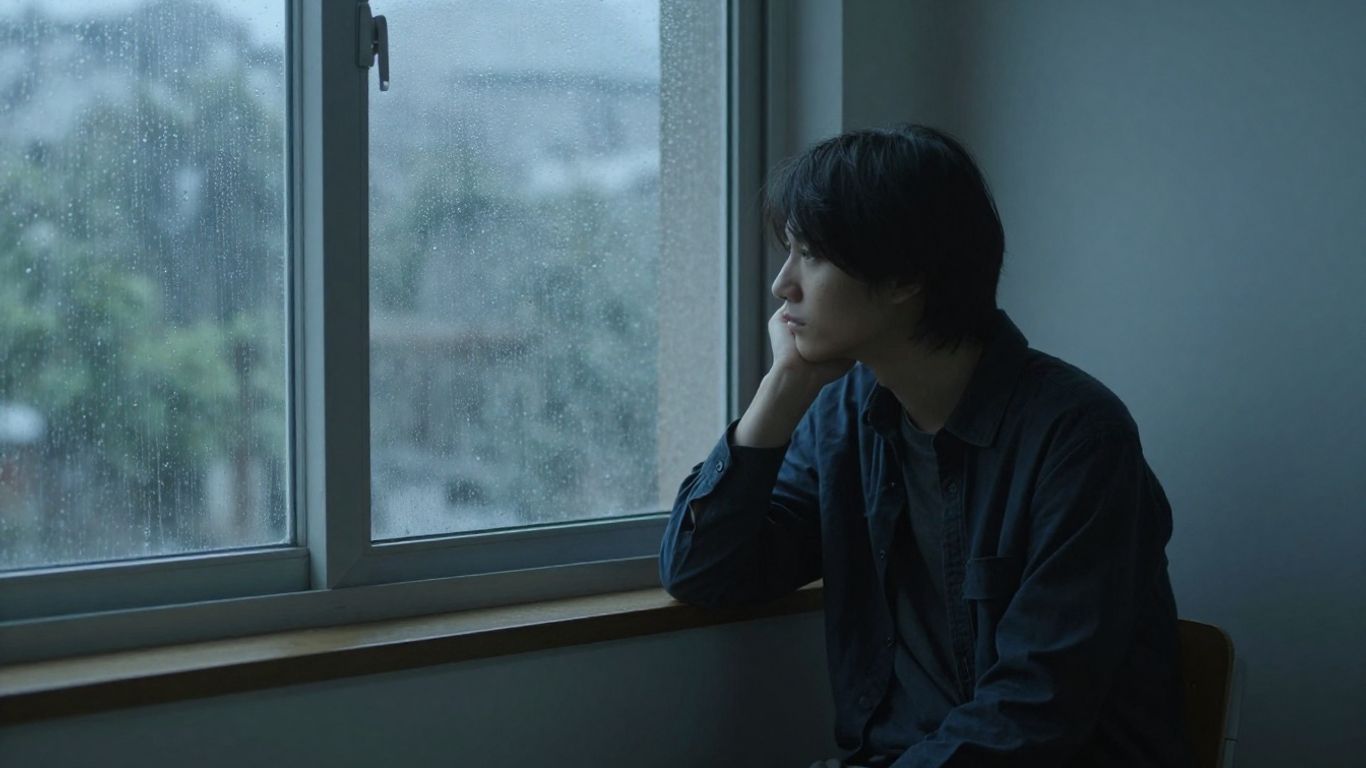
Research on expressive suppression does not support a simple rule that every act of emotional restraint causes harm. Outcomes vary with the person, setting, relationship, and meaning attached to the choice. Still, repeated suppression is often associated with greater mental load and less psychological ease.
How suppression affects attention and working memory
When someone suppresses an emotion, attention may be split between the surrounding task and the effort to keep the feeling from showing. This can make concentration less efficient, particularly when the emotion is strong or the situation keeps reminding the person of it. The mind is not emptying the feeling; it is supervising it.
That burden can show up as losing the thread of a conversation, rereading the same paragraph, or struggling to make a decision. It may be subtle, and it does not prove that suppression is the sole cause of any one lapse, but the pattern is consistent with the idea that emotional control can consume cognitive resources.
The rebound effect of unwanted thoughts and feelings
Attempts to force a thought or feeling away can sometimes make it more noticeable. Monitoring whether the unwanted experience is still present requires checking for it, which keeps it mentally nearby. Once the person stops actively controlling attention, the feeling may return with renewed force.
This rebound is not inevitable, and it is not a sign of personal weakness. It is one reason strategies based only on “don’t think about it” often disappoint. A gentler approach is to notice the experience, name it, and redirect attention without demanding that it disappear immediately.
Links with anxiety, depression, and emotional exhaustion
Frequent suppression has been associated in research with symptoms such as anxiety, depressed mood, lower life satisfaction, and emotional exhaustion. These findings describe relationships, not a single pathway or diagnosis. Someone may suppress feelings because they already feel anxious or depressed, just as suppression may add to the burden.
The context also matters. Research discussed in this study of emotional suppression points to differences related to authenticity and uncertainty about whether to express feelings. That nuance matters because the same outward behavior can carry different psychological meanings for different people.
Why suppressed emotions can feel stronger later
An emotion may intensify when its trigger remains unresolved, when the person keeps revisiting the event, or when the body stays activated. Suppression can also prevent useful information from reaching awareness: anger may signal a boundary, sadness may signal loss, and fear may signal a need for protection.
When the feeling eventually breaks through, it may appear disproportionate to the immediate event. Often, the reaction reflects accumulated experiences rather than only the latest inconvenience. This is one reason delayed emotional responses can surprise both the person experiencing them and the people nearby.
The effects on relationships and behavior
Emotions communicate needs, limits, affection, disappointment, and repair. When they are consistently concealed, other people lose some of the information they use to understand what is happening. Relationships may then become quieter on the surface while becoming less secure underneath.
How emotional concealment changes communication
A person who hides distress may give short answers, avoid important topics, or agree too quickly to keep the peace. Others may interpret this as indifference, approval, or stability when it is actually uncertainty or hurt. The resulting misunderstanding can make honest conversation even harder.
Clear communication does not require revealing every private feeling. It may be enough to say, “I am upset and need time,” or “I want to discuss this, but not while I am overwhelmed.” Such statements preserve boundaries while giving the relationship accurate information.
The connection between suppression and social isolation
People who expect judgment may stop reaching out before anyone has a chance to respond. They may assume that their feelings are burdensome, dramatic, or unacceptable. Over time, withholding becomes a habit, and the lack of connection can reinforce the belief that no one would understand.
The relationship between suppression and isolation can run both ways. Limited support makes emotional expression feel riskier, while chronic concealment prevents supportive relationships from becoming more intimate. Research on the hidden costs of being strong also examines how social expectations and perceived support shape well-being.
Irritability, withdrawal, and emotional outbursts
Suppressed distress does not always remain quiet. It may emerge as impatience, sarcasm, avoidance, sudden crying, or an argument that seems to begin over something minor. These reactions can be understood as signs of accumulated strain, though they do not excuse harmful behavior.
A useful response is to look for the earlier signals rather than waiting for the outburst. Fatigue, muscle tension, repetitive thoughts, and a growing urge to withdraw may indicate that a difficult feeling needs attention. Addressing those signals earlier can reduce the pressure that eventually spills into behavior.
Why people may misread suppressed emotions
Facial expressions and words are only part of emotional communication. A person who appears calm may be frightened; someone who sounds blunt may be overwhelmed; someone who withdraws may want reassurance but not know how to ask. These ambiguities invite guesses, and guesses are often shaped by past conflict or personal expectations.
Asking a gentle, specific question is usually more reliable than interpreting silence. “Do you need space, or would talking help?” gives the other person options without insisting that they disclose everything. It also makes emotional communication more collaborative.
The physical evidence behind emotional suppression
Emotions involve the body as well as the mind. A threat, loss, or conflict can change breathing, muscle tone, heart rate, digestion, and sleep even when the person says little about it. Physical reactions do not prove that suppression caused an illness, but they help explain why emotional strain can feel bodily.

Stress hormones and nervous system activation
When a person feels threatened or distressed, the nervous system can shift toward readiness. Heart rate may rise, muscles may tighten, and attention may narrow toward possible danger. If difficult emotions are repeatedly pushed aside without recovery, the body may have fewer opportunities to return to a settled state.
The experience is not simply a matter of “stored emotions” sitting in one body location. It is better understood as recurring patterns of appraisal, activation, attention, and recovery. Suppression may contribute to those patterns, but many other factors—including pain, illness, sleep loss, and current stress—can do so as well.
Effects on heart rate, blood pressure, and cardiovascular strain
Studies of emotional expression and suppression have examined changes in heart rate, blood pressure, and other markers of physiological activation. Suppressing visible emotion during a stressful task can leave the body working hard even when outward behavior appears controlled. Repeated activation may be relevant to cardiovascular strain over time.
The findings should be interpreted carefully. A short-term laboratory response is not the same as a diagnosis or a prediction of future disease. Persistent chest pain, fainting, severe shortness of breath, or unusual palpitations warrant medical attention rather than an assumption that emotions explain everything.
Possible links with sleep, pain, and digestive symptoms
Unprocessed distress may contribute indirectly to difficulty falling asleep, restless nights, headaches, jaw tension, or heightened awareness of pain. Stress can also affect appetite and digestive comfort. These experiences are common, but they have many possible causes and should not automatically be attributed to emotional suppression.
A practical way to notice a pattern is to compare symptoms with context over time. Do they increase after conflict, emotional avoidance, or demanding social situations? Do they ease with rest, support, or honest conversation? Patterns can guide reflection, while a clinician can assess physical causes.
What the research can and cannot prove about physical illness
Research can show associations between emotional suppression and physiological responses, and some studies can examine whether one variable predicts another over time. It cannot establish that suppressing a particular feeling caused a specific illness in a specific person. Nor does it mean that people are responsible for medical conditions because they failed to express themselves correctly.
The most responsible interpretation is layered. Emotional habits may be one influence among genetics, environment, behavior, medical history, and access to care. Treating physical symptoms seriously and exploring emotional stress can happen at the same time.
Why the impact differs from person to person
There is no universal emotional response to suppression. The same decision to stay quiet may protect one person during a difficult meeting and leave another feeling cut off from themselves. Meaning, choice, safety, and duration all shape the outcome.
The role of emotion, intensity, and duration
Not every emotion carries the same demands. A mild annoyance may pass without much attention, while grief, panic, shame, or sustained anger can occupy the mind for hours. Suppressing a feeling for a few minutes is also different from concealing it for months.
The pattern is often more informative than a single event. Ask how intense the feeling was, how long it lasted, whether the person had a later chance to process it, and whether suppression was freely chosen. Those details help avoid both alarmism and dismissal.
Cultural and social expectations around emotional expression
Families, workplaces, communities, and cultures teach different rules about which emotions may be shown, to whom, and in what form. Some settings value restraint as respect or composure. Others encourage open expression. Neither style automatically guarantees well-being.
Problems may arise when a person is punished, ridiculed, or excluded for showing ordinary human feelings. Expectations around masculinity, caregiving, age, race, class, and professionalism can add further pressure. Understanding the social context makes the behavior easier to interpret without reducing it to a personal flaw.
Trauma, attachment, and learned coping patterns
People who grew up around volatility, criticism, neglect, or unpredictable care may learn that emotional visibility is dangerous. Suppression can then become an intelligent early adaptation: staying quiet may once have reduced conflict or protected connection. Later, the same strategy may persist even when the environment is safer.
Trauma-informed support focuses on choice and safety rather than forcing disclosure. A person does not need to reveal painful memories before they are ready. Building trust, noticing present-day triggers, and learning ways to settle the body can come first.
Personality, resilience, and available social support
Temperament, coping skills, confidence, and relationships all influence how suppression feels. Someone with strong support may choose temporary restraint and discuss the emotion later. Someone isolated or already exhausted may have no safe place to put the feeling once it has been hidden.
The following distinctions can help organize the pattern without turning them into rigid categories:
| Pattern | What may be happening | Helpful question |
|---|---|---|
| Brief restraint | Expression is delayed for safety or timing | Is there a plan to revisit it? |
| Repeated concealment | Feelings are routinely hidden from others and self | What makes expression feel unsafe? |
| Private processing | The person reflects without public disclosure | Is the feeling becoming clearer over time? |
| Chronic avoidance | Triggers and conversations are persistently escaped | What costs is avoidance creating? |
These are prompts for reflection, not diagnostic labels. The same person may move between patterns depending on the relationship and circumstances.
How to recognize chronic emotional suppression
Chronic suppression is rarely identified by one quiet conversation. It is more often visible as a repeated mismatch between what a person says, what their body signals, and what happens after stressful events. Curiosity is more useful than self-criticism when examining that mismatch.
Common thoughts, behaviors, and body signals
Common signs can include saying “I’m fine” automatically, feeling blank when asked about emotions, avoiding conflict at any cost, or becoming unexpectedly irritable. Physical clues may include shallow breathing, clenched muscles, stomach discomfort, headaches, fatigue, and trouble sleeping. None of these signs is specific to suppression, but several together may deserve attention.
People may also feel detached from positive emotions, not only painful ones. If excitement, affection, or relief seem difficult to access or show, emotional constriction may be broader than a single avoided feeling. A trusted person may notice the pattern before the individual does.
Questions for identifying patterns and triggers
Reflection works best when it is concrete. Instead of asking only “Why am I like this?” consider when the pattern appears, what emotion is hardest to admit, and what consequence is feared. The answers may reveal a learned rule such as “anger makes people leave” or “needing help is unsafe.”
Useful questions include:
- What feeling was present just before I shut down or changed the subject?
- What do I predict would happen if I expressed it calmly?
- Do I process the emotion later, or does it keep returning unchanged?
- Which people or settings make honest expression feel safer?
Writing down brief observations can reveal patterns without requiring a polished explanation. The aim is not to force expression, but to increase choice.
Distinguishing suppression from healthy privacy
Healthy privacy involves deciding what to share, with whom, and when. It can coexist with clear self-awareness and a sense that disclosure is optional. Suppression is more concerning when the person feels unable to acknowledge the emotion even privately, or when concealment repeatedly creates distress and disconnection.
Boundaries also matter. A person does not owe every colleague, relative, or acquaintance access to their inner life. Saying “I would rather not discuss that” may be a healthy boundary; pretending nothing happened while suffering alone may be a sign that more support is needed.
When symptoms may indicate a mental health condition
Persistent low mood, panic, trauma symptoms, severe anxiety, hopelessness, compulsive avoidance, or major changes in sleep and functioning may indicate a mental health condition. Suppression can be part of the picture without being the diagnosis. A qualified clinician can assess symptoms, history, safety, and possible treatment options.
Urgent help is appropriate when someone may harm themselves or another person, cannot care for basic needs, or feels unsafe. In the United States, calling or texting 988 connects people with the Suicide & Crisis Lifeline; immediate danger requires emergency services. Support should be sought for the full situation, not only for the question of whether an emotion was suppressed.
Healthier ways to respond to difficult emotions
Healthier coping does not mean expressing every feeling immediately or acting on every impulse. It means making room to notice an emotion, understand what it may be communicating, and choose a response that fits the situation. Progress is usually gradual, especially when suppression once served a protective purpose.
Naming and accepting emotions without acting on them
A simple label—angry, ashamed, lonely, threatened, disappointed—can create a little distance from an overwhelming experience. Acceptance does not mean approval, surrender, or obedience. It means acknowledging that the feeling is present before deciding what to do.
Try pairing the label with a need: “I feel hurt, and I need clarification,” or “I feel afraid, and I need a slower conversation.” This approach respects the emotion without handing it control of the next action.
Reappraisal, mindfulness, and other regulation strategies
Reappraisal involves considering another interpretation of an event without pretending that the original reaction was foolish. Mindfulness can help a person observe thoughts, sensations, and urges as changing experiences. Breathing exercises, movement, grounding, sleep, and time away from an escalating situation can also support regulation.
No single technique works for everyone. A useful strategy is one that lowers arousal enough to restore choice, rather than one that merely makes the feeling disappear. If a practice becomes another way to avoid every difficult conversation, it may need to be balanced with later processing.
Safe emotional expression through conversation or writing
Expression can be private, relational, creative, or structured. A person might write an uncensored page and then decide what, if anything, to share. They might speak with a trusted friend using a clear request, such as “Please listen first; I am not asking you to solve this.”
A few conditions make expression safer: consent, privacy, enough time, and a willingness to pause if either person becomes overwhelmed. The goal is not dramatic release. It is a clearer connection between inner experience, words, boundaries, and action.
A conversation is most useful when it leads to understanding or a manageable next step. If the listener responds with judgment or the situation is unsafe, choosing another support person is not failure; it is appropriate self-protection.
When therapy or medical support may be appropriate
Therapy can help people understand why suppression developed, practice emotional language, work through trauma, and build safer relationship patterns. Medical support is also appropriate for persistent pain, sleep changes, digestive symptoms, heart symptoms, or any concern that could have a physical cause.
Seeking help does not require proving that emotions caused the problem. It is enough to notice that distress is persistent, functioning is changing, or coping no longer feels effective. A clinician can help separate overlapping psychological and physical factors with care.
Conclusion
Suppressing emotions is neither a moral failure nor a harmless habit by definition. Temporary restraint can protect safety and relationships, while chronic concealment may increase mental effort, strain communication, and accompany bodily stress. The most useful response is compassionate curiosity: notice the pattern, make room for the feeling, and seek support when carrying it alone begins to affect health or daily life.
Frequently Asked Questions
Is suppressing emotions always harmful?
No. Briefly delaying expression can be useful when safety, timing, or another person’s needs require composure. It becomes more concerning when it is constant, involuntary, or followed by growing distress and disconnection.
What is the difference between suppression and regulation?
Suppression mainly limits the outward display of an emotion. Regulation includes noticing, understanding, and responding to the emotion in a deliberate way, whether that means expressing it, soothing it, or waiting until a better time.
Can suppressed emotions cause physical symptoms?
Emotional strain can contribute to muscle tension, sleep problems, digestive discomfort, and changes in arousal. These symptoms have many possible causes, so persistent or severe physical concerns should be evaluated medically rather than attributed to emotions alone.
Why do emotions sometimes return more strongly after being pushed away?
Trying not to think or feel something can keep attention focused on whether it is still present. If the underlying situation remains unresolved, the emotion may also continue building until it is acknowledged or addressed.
How can someone start expressing feelings safely?
Begin with a small, specific statement to a trustworthy person, or write privately before deciding what to share. Naming the feeling and making a clear request can be safer than waiting until the emotion becomes overwhelming.
Can emotional suppression be connected to anxiety or depression?
It can be associated with anxiety, depressed mood, and exhaustion, but it is not proof of a particular diagnosis. A mental health professional can consider the complete pattern, including duration, severity, history, and effects on daily functioning.
When should someone seek professional help?
Support may be appropriate when distress persists, relationships or work are suffering, physical symptoms continue, or coping strategies no longer help. Immediate help is needed when someone feels unsafe or may harm themselves or another person.

0 Comments