


Key Takeaways
NSDR is a broad label for guided practices that encourage quiet, awake rest. Its value may lie in creating a pause, not in replacing sleep or promising a specific brain state.
- NSDR can include yoga nidra, body scans, and other guided relaxation practices.
- The term does not refer to one standardized technique or a guaranteed state.
- Early research suggests possible benefits, but the evidence is limited and methods vary.
- A session may help you relax, but it cannot make up for chronic sleep loss.
- Use a comfortable approach, adjust it to your needs, and seek care for persistent sleep or fatigue problems.
What NSDR means and how it differs from sleep
Non-sleep deep rest, or NSDR, describes practices intended to help someone relax while remaining awake. A session often involves lying down, listening to a guide, and bringing attention to breathing or bodily sensations. The phrase has become a useful umbrella, but it can make a varied set of exercises sound more uniform than it is.
The basic idea behind non-sleep deep rest
The basic idea is to step out of active problem-solving for a while and give attention a quieter focus. A guide might invite you to notice the weight of your body, follow the breath, or move awareness gradually from one area to another. You do not need to fall asleep for the session to count as rest, and you do not need to produce a particular sensation. Searches for “NSDR non sleep deep rest science” often assume there is one defined state behind the term; in practice, the experience can range from simple calm to drowsiness or wandering thoughts.
How NSDR relates to yoga nidra and guided relaxation
Yoga nidra is one practice commonly associated with NSDR. It usually follows spoken instructions while the participant lies still, and may include attention to the body, breath, or an intention. Other guided relaxation recordings use overlapping techniques without following the same format or language. The shared family resemblance is more meaningful than a claim that every version is identical.
What makes NSDR different from meditation
The categories overlap. Some meditation practices involve sitting upright and returning attention to an object such as the breath, while many NSDR recordings are done lying down and emphasize physical relaxation. But posture alone does not settle the distinction, and meditation can also include body scans or guided imagery. It is more useful to think of NSDR as a loose label for certain restful practices than as the opposite of meditation.
Why the term does not describe one standardized method
There is no single universally accepted NSDR protocol. Session length, wording, breathing cues, and whether a guide uses yoga nidra techniques can all vary. That matters when interpreting research: results from one specific guided exercise do not automatically establish what every practice called NSDR will do. The label is convenient, but the details of the method still matter.
What may happen in the brain and body during NSDR
During a quiet guided session, attention may shift away from external demands and toward sensations, breathing, or a voice. Some people notice physical ease; others stay alert, become sleepy, or find their mind jumping between thoughts. These responses are ordinary and do not, by themselves, reveal a special brain state.
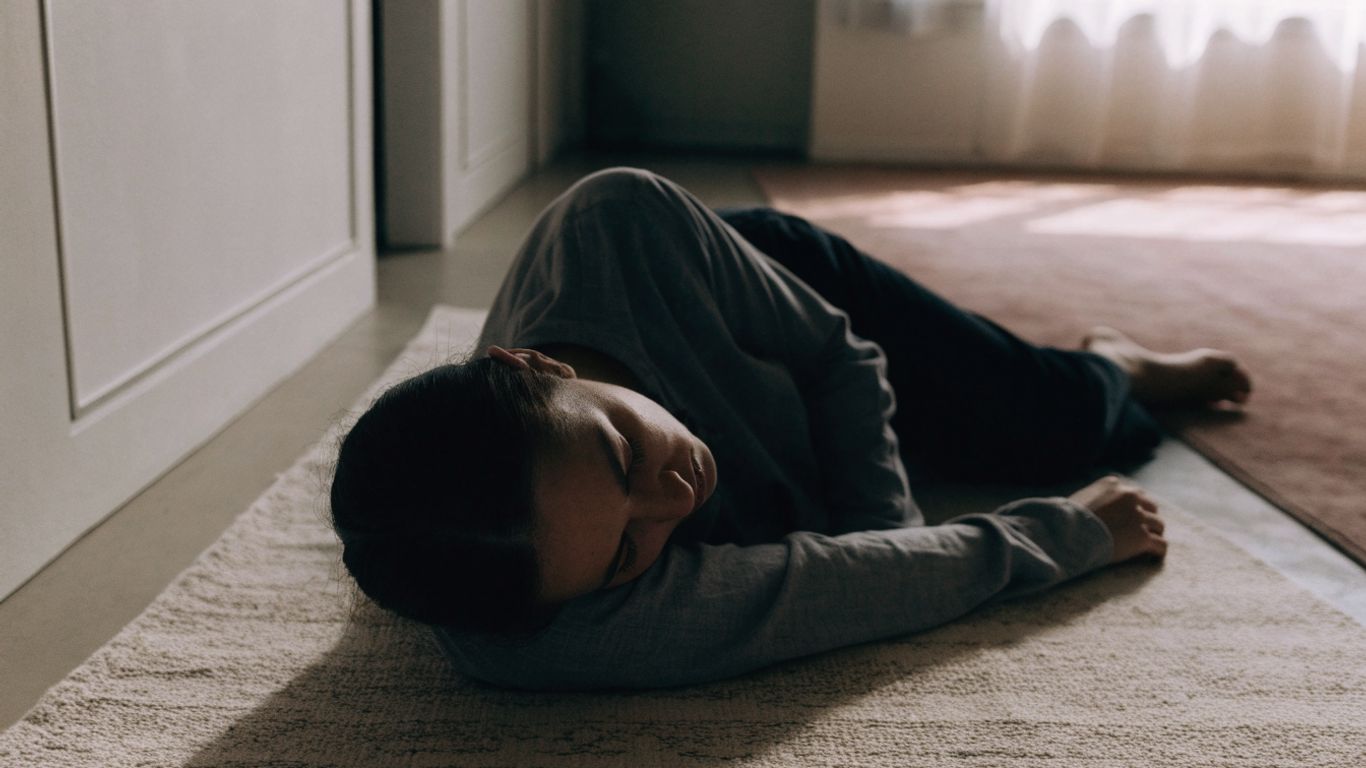
How attention shifts from external tasks to internal sensations
A guide offers a sequence of simple cues, giving attention something manageable to follow. Noticing a hand or the rise and fall of the abdomen can interrupt the habit of rehearsing tasks, at least briefly. Attention may drift and return several times. That movement is part of the experience, not evidence that someone has failed to relax.
The role of breathing and the autonomic nervous system
Slow, comfortable breathing can feel settling for many people, and attending to the breath may make it easier to disengage from a busy train of thought. The autonomic nervous system helps regulate functions such as heart rate and breathing, but a relaxation exercise does not guarantee a particular physiological response. People vary, and factors such as posture, health, and the surrounding environment can shape how a session feels. There is no need to force deep breaths; ordinary, unstrained breathing is enough.
What brain-wave research can—and cannot—tell us
Brain activity can be studied with tools such as electroencephalography, which records electrical patterns at the scalp. Such measurements may help researchers describe what happened during a particular experiment, but they do not act as a simple meter for “deep rest.” A brain-wave pattern can have several possible interpretations, and it does not establish that a person received a specific benefit. A single recording also cannot define every person’s experience of a loosely named practice.
Why proposed mechanisms are not proof of a unique NSDR effect
It is plausible that a pause from demanding tasks, guided attention, and physical stillness could contribute to feeling calmer. Those ingredients also appear in other forms of rest and relaxation, so an improvement after a session would not prove that NSDR has a unique mechanism. Researchers need to separate the effects of the guidance, expectation, time spent resting, and the specific technique. For now, the likely ingredients are varied rather than a single established switch in the brain.
What the science says about NSDR’s potential benefits
Research related to NSDR includes studies of particular guided practices, rather than one agreed method used consistently across trials. Researchers may measure short-term stress, attention, or sleep-related outcomes, and those are not interchangeable. The general picture is worth exploring, provided early findings are not treated as a promise of a reliable effect for everyone.
Findings on relaxation and perceived stress
Guided relaxation may help some people feel calmer in the moment, especially when they have a quiet place to pause and follow simple cues. Self-reported calm is a meaningful experience, though it is different from demonstrating a lasting health change. A session can also feel neutral or frustrating, particularly if someone expects to stop thinking altogether. The results of any one practice should be read in light of what was measured and how participants experienced it.
Early research on attention and perceptual learning
Some research has asked whether a period of non-sleep deep rest affects performance on tasks involving perception. The research on perceptual performance is a useful example of a focused question, but findings from a specific task cannot establish a broad improvement in everyday attention, learning, or productivity. Study design, sample size, the comparison condition, and whether results can be repeated all affect how much weight to give a finding. A striking result in one setting is a reason to investigate further, not a general rule.
What studies suggest about sleep and recovery
Research on guided relaxation and related practices sometimes considers sleep, fatigue, or recovery, but those outcomes need careful separation. Feeling rested after a quiet break is not the same as getting the biological functions of a night’s sleep. Nor does a short-term change in a self-report measure necessarily show a lasting improvement. It helps to look at what the study actually measured before applying its result to a broader claim.
How to interpret limited or preliminary evidence
A quick comparison of common evidence questions can help keep claims in proportion. The examples below are broad categories, not a scorecard for every study or practice.
| Evidence question | What it can tell us | What it cannot establish alone |
|---|---|---|
| Did participants report feeling calmer? | How the session felt to those participants | A lasting reduction in stress for everyone |
| Did a task score change afterward? | Whether performance differed in that study | A general boost to learning or daily productivity |
| Did sleep-related measures change? | What happened on the measured sleep outcome | That NSDR replaces adequate sleep |
Read each result in its own context, especially when a study is small or tests only one session. Consistent findings across different groups and well-designed studies would support stronger conclusions than a single promising result. For now, the evidence supports curiosity more than certainty.
How NSDR compares with sleep and other forms of rest
Quiet rest and sleep can both be welcome, but they are not interchangeable. NSDR usually involves staying awake and following some form of attention cue, while sleep involves a change in consciousness and its own biological processes. Comparing practices by asking what each can reasonably offer is more helpful than treating them as competing versions of the same thing.

Why quiet rest is not a substitute for sleep
Sleep supports physical and mental functions that a guided relaxation session cannot be assumed to reproduce. Resting quietly may offer a break, but it does not erase the effects of repeatedly getting too little sleep. If you are sleep-deprived, the central response is to address the sleep problem and protect time for sleep, not to rely on NSDR as a replacement. A session can be one small part of a day, not a workaround for chronic loss.
How NSDR differs from a nap
A nap involves falling asleep for a period of time; NSDR is generally practiced with the intention of remaining awake, even if someone occasionally dozes off. A nap may be more useful when a person is genuinely sleepy and circumstances allow sleep. A guided session may fit better when the aim is to pause without planning to sleep. Neither is guaranteed to leave every person feeling refreshed, and a session that turns into sleep is not a reason for self-criticism.
When meditation may be a better fit
If you want to practice observing thoughts, build a seated routine, or work with a particular meditation tradition, a meditation practice may suit your purpose better. NSDR may be appealing when lying down and following a guide feels easier than sitting quietly on your own. There is no need to choose one label permanently; the useful question is which practice fits your needs and feels manageable today.
How expectations can shape the experience
The words “deep rest” can create a high bar: people may wait for a dramatic shift or judge themselves for remaining alert. But relaxation often arrives as a modest change, such as noticing less tension or feeling less caught up in a thought. A session may also be uneventful. Letting the experience be ordinary can make the practice easier to approach without turning it into another performance test.
How to practice NSDR
An NSDR session can be simple: choose a guide, find a position you can hold comfortably, and follow the cues as best you can. You do not need special equipment or a perfect environment. The aim is not to win a contest in relaxation, but to give yourself a low-demand interval and notice how it goes.
Choosing a guided practice, body scan, or yoga nidra
A guided recording can be a helpful starting point because it provides a sequence to follow. A body scan focuses attention on different areas of the body, while yoga nidra recordings may use a more specific set of instructions and language. If you are unsure, try a short, straightforward practice with a voice and pace that feel comfortable. You can change the format if it does not suit you.
Finding a comfortable position and low-distraction setting
Choose a posture that allows you to stay still without straining. Many people lie down, while others prefer a reclined or seated position, especially if lying down makes them uncomfortable or too sleepy. Reduce avoidable distractions, silence alerts if practical, and keep the room at a comfortable temperature. A quiet setting can help, but a perfect one is not required.
Following cues without trying to force a particular state
It can help to treat the instructions as invitations rather than tests. If a cue asks you to notice a sensation and you cannot feel much, simply move on to the next one. During practice, a few ordinary options can keep the process flexible:
- Return attention to the guide’s voice when you notice your mind has wandered.
- Let your breathing stay natural instead of trying to make it especially slow or deep.
- Adjust your position if discomfort is pulling your attention away.
- Stop or switch to a simpler exercise if the practice feels unpleasant.
A wandering mind does not mean you have done it wrong; noticing the drift is already a way of returning to the exercise. Keep the practice comfortable, and do not try to force a particular feeling or state.
Adjusting practice length to your schedule and response
Start with a length that feels realistic, rather than assuming a longer session must be better. You might use a brief recording during a break, or choose a longer one when you have more time and feel comfortable doing so. Notice whether the session leaves you calmer, sleepy, restless, or much the same. That response can guide your next choice without turning it into a strict rule.
When to use NSDR and what to expect
NSDR can fit into a moment when you want a pause and can safely stop what you are doing. People use guided rest at different times of day, but there is no universal best hour or guaranteed effect. It may take a few attempts to find a format that feels natural, and it is fine if the practice is not useful for you.
Using a session during a midday break
A short session during a midday break can create a boundary between one stretch of activity and the next. Choose a place where you can sit or lie down without needing to monitor other tasks. If you have to stay alert for safety or work responsibilities, use a posture and setting that make that possible, or wait for a more suitable time. The session is a pause, not a substitute for a meal, movement, or sleep when those are what you need.
Practicing before or after a demanding task
Before a demanding task, a brief guided exercise may give you a moment to settle and gather attention. Afterward, it may help mark a transition away from sustained concentration. Neither timing guarantees better performance or faster recovery. Try it when it fits your day and judge it by your own experience, rather than expecting a particular result from the clock.
Recognizing relaxation without expecting instant results
Some signs of settling are subtle: you may feel less keyed up, notice your breath without effort, or simply find it easier to pause. Not everyone feels a clear change, and the absence of one is not proof that the practice failed. If you keep returning to the instructions, that is enough; there is no need to measure your session against someone else’s description.
Adapting the practice if you become sleepy or distracted
If you become sleepy and that is not what you want, try sitting or reclining rather than lying flat, or practice at a time when you feel more alert. If your attention keeps drifting, choose a shorter recording or one with simpler cues. You can also stop and try another form of rest. The practice should not become a new source of pressure.
NSDR’s limits and safety considerations
NSDR is a low-demand relaxation practice for many people, but it is not a treatment for every kind of fatigue, stress, or sleep problem. It can also feel uncomfortable for some, particularly if turning attention inward or closing the eyes is unsettling. Keep your expectations modest, adapt or stop when needed, and take ongoing symptoms seriously.
Why it cannot make up for chronic sleep loss
A quiet session does not provide a replacement for regular, sufficient sleep. If you are often short on sleep, a relaxation recording may offer a brief respite without correcting the underlying problem. Prioritize a sustainable sleep opportunity and consider what is interfering with it. Do not use NSDR to convince yourself that persistent sleep loss no longer matters.
What remains uncertain in NSDR research
The term covers practices that differ in their instructions and structure, and studies do not always use the same definitions or measures. This makes it difficult to attribute an observed effect to NSDR as a single, distinct intervention. Researchers also need to establish how long any effects last and which people might benefit from which approaches. Current evidence does not justify treating proposed brain mechanisms or possible benefits as settled facts.
When guided relaxation may feel uncomfortable
Quiet, inward-focused exercises are not comfortable for everyone. Some people may feel restless, anxious, or more aware of sensations they would rather not focus on. You can keep your eyes open, switch to an external point of attention, choose a shorter or less body-focused practice, or stop. There is no requirement to push through an exercise that feels wrong for you.
When persistent fatigue or sleep problems call for professional care
Ongoing fatigue, repeated difficulty sleeping, or sleepiness that interferes with daily life can have causes that a relaxation session will not address. Consider speaking with a qualified health professional, especially if the problem persists or affects your safety and functioning. A clinician can help assess what may be contributing and discuss appropriate options. NSDR may be an optional rest practice, but it should not delay that conversation.
Conclusion
NSDR is best understood as a broad name for guided practices that invite awake, quiet rest—not as a standardized technique or a substitute for sleep. Some people find these sessions calming, and early research offers questions worth pursuing, but the evidence remains limited and context matters. Try a comfortable approach if it appeals to you, notice your own response, and keep its role in perspective.
Frequently Asked Questions
What does NSDR stand for?
NSDR stands for non-sleep deep rest. It is a broad term for practices intended to support relaxation while a person remains awake.
Is NSDR the same as yoga nidra?
No. Yoga nidra is one practice often grouped under the NSDR label, but the term can also refer to other guided relaxation exercises.
Do you have to fall asleep during NSDR?
No. NSDR is generally intended as awake rest, although a person may become drowsy or briefly fall asleep during a session.
How long should an NSDR session last?
There is no single required duration. Choose a length that fits your schedule and feels comfortable, then adjust based on your response.
Can NSDR replace a nap or a full night of sleep?
No. A guided rest session is different from sleep and should not be treated as a replacement for a nap when you need sleep or for adequate nighttime sleep.
What if I feel distracted during NSDR?
Distraction is common. When you notice it, you can gently return attention to the guide, shorten the session, or try another practice if the format is not working for you.
Is NSDR suitable for everyone?
Not necessarily. Some people find inward-focused relaxation uncomfortable; they can adapt or stop the practice. Persistent fatigue or sleep problems are reasons to seek professional advice.

0 Comments